Online dating has created new opportunities for people living with STD-related health conditions to build friendships, emotional support, and meaningful relationships.
For many singles living with herpes, HIV, HPV, or other STI-related conditions, specialized dating communities can feel far more comfortable than mainstream apps because conversations begin with shared understanding rather than fear of stigma.
But online dating also comes with risks.
Unfortunately, not every profile represents honest intentions.
Learning to identify warning signs can help protect your privacy, emotional well-being, and personal safety.
If you’re exploring STD online dating, understanding red flags is essential.
Why Safety Matters in STD Online Dating
Dating while living with an STD can create unique emotional vulnerabilities.
People may already feel:
- disclosure anxiety
- loneliness
- fear of rejection
- emotional uncertainty
- privacy concerns
- hope for understanding connection
Scammers and manipulative individuals sometimes exploit emotional openness.
That’s why awareness matters.
The Federal Trade Commission consistently warns about online romance scams, privacy risks, and deceptive online interactions.
For STD-positive singles, privacy protection becomes even more important.
Why Red Flags Matter in STD Dating
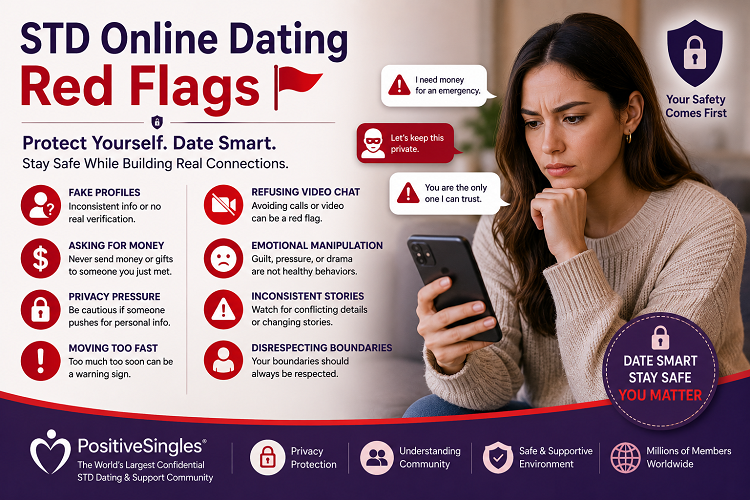
Dating with an STD often involves deeper conversations much earlier than traditional dating. Discussions about health status, boundaries, testing, and protection can create emotional closeness quickly. While honesty is important, emotional vulnerability can also make it easier for manipulative people to gain trust fast.
Some individuals use sympathy, emotional pressure, or false understanding to move relationships forward before real trust is built. That is why recognizing Red Flags In STD Dating is so important. Your emotional and physical well-being should always come first.
Healthy relationships never require sacrificing your comfort or ignoring your instincts.
They Avoid Honest Conversations About Sexual Health
One of the biggest warning signs in Safe STD Online Dating is someone refusing to communicate openly about testing, protection, or their own sexual health history. A respectful partner understands these conversations are necessary and should never make you feel guilty for asking questions.
If someone constantly changes the subject, becomes defensive, or acts annoyed whenever health discussions come up, pay attention. Some people try to minimize the importance of testing or pressure others into ignoring protection completely. These behaviors are not signs of trust or confidence. They are signs of irresponsibility.
Open communication creates safety. Avoiding important conversations creates risk.
Expert Insight on Emotional Vulnerability
Relationship experts often note that emotional urgency can cloud judgment.
Dr. Justin Lehmiller, social psychologist and author of Tell Me What You Want, has extensively explored emotional vulnerability, relationship expectations, and communication behavior in dating.
His broader research reinforces an important point:
People who feel emotionally hopeful may sometimes overlook warning signs because connection feels deeply meaningful.
Recognizing red flags early protects both emotional and practical safety.
Fast Emotional Attachment Can Be a Warning Sign
Many people living with herpes or HIV crave emotional understanding, especially after difficult dating experiences. Unfortunately, some individuals take advantage of this by creating intense emotional connections too quickly.
You may meet someone who calls you perfect after only a few conversations, talks about forever immediately, or pushes for deep emotional dependence within days. While strong chemistry can feel exciting, healthy relationships grow steadily over time.
In many cases, manipulative people create fast emotional attachment so their behavior gets overlooked later. This is one of the most overlooked Online Dating Warning Signs because attention can sometimes feel comforting after experiences with rejection.
Real connection should feel natural, not rushed.
Inconsistent Stories Usually Mean Trouble
Trust becomes difficult when someone’s stories constantly change. Maybe they lie about their relationship status, avoid video calls, or keep giving different explanations about testing and past experiences.
Dishonesty in small details often reveals larger problems later. In STD Dating Safety, honesty matters even more because it directly affects emotional trust and physical health.
If someone seems secretive, vague, or inconsistent repeatedly, do not ignore it just because the connection feels strong emotionally.
Consistency builds trust. Confusion destroys it.
Pressure Around Unsafe Sex Is a Major Red Flag
One of the most dangerous Red Flags In STD Dating is pressure around unprotected sex or risky behavior.
Some people may say things like:
- “If you trust me, protection should not matter.”
- “Medication makes transmission impossible.”
- “You worry too much.”
Healthy relationships involve shared responsibility and mutual protection. Respectful partners care about reducing risks together rather than dismissing concerns.
This is especially important when discussing HIV Dating Tips or navigating relationships involving herpes disclosure. Anyone who pressures you to ignore your boundaries does not respect your well-being.
Safety should never feel negotiable.
Emotional Safety Matters Just as Much as Physical Safety
People often focus heavily on physical protection in STD-related dating conversations, but emotional safety matters equally.
A healthy relationship should bring emotional stability, not constant anxiety. If someone regularly leaves you feeling confused, emotionally drained, pressured, or insecure, those feelings matter.
Many people ignore emotional discomfort because they fear starting over again. But emotional stress often becomes worse over time when early warning signs are ignored.
In healthy relationships, communication feels calm and respectful even during uncomfortable conversations.
Community Experiences Show Common Patterns
Many people within herpes and HIV-positive communities share similar experiences about overlooking warning signs too early. Community discussions often reveal patterns where emotional vulnerability caused individuals to ignore dishonesty, pressure, or disrespect because they felt grateful someone accepted their diagnosis.
Several people later admitted the first warning signs appeared very early:
- disrespectful jokes,
- avoidance of health conversations,
- pressure to move too fast,
- emotional inconsistency,
- guilt-based manipulation.
One common lesson repeated across support communities is simple: acceptance without respect is not enough.
Healthy relationships involve honesty, patience, kindness, and emotional accountability.
Building Confidence in Safe STD Online Dating
Confidence in dating after an STD diagnosis does not happen overnight. Many people struggle with fear of rejection or anxiety about disclosure. But confidence grows when you stop believing you must tolerate unhealthy behavior just to avoid loneliness.
The goal of Safe STD Online Dating is not just finding someone who accepts your diagnosis. It is finding someone who respects your boundaries, communicates honestly, and supports emotional safety too.
Healthy partners:
- communicate openly,
- respect boundaries,
- discuss protection responsibly,
- support honesty,
- avoid manipulation,
- create emotional stability.
Good relationships should feel peaceful more often than stressful.
Trust Your Instincts More Often
Many people later realize they noticed warning signs immediately but convinced themselves to ignore them. Sometimes intuition notices problems before logic fully understands them.
If someone repeatedly makes you feel anxious, emotionally pressured, unsafe, or uncertain, you do not need permission to walk away.
Protecting your peace is not overreacting.
Whether you are navigating Dating With Herpes Online or learning new positive singles dating tips, boundaries matter. Your comfort matters. Your emotional health matters.
Never feel guilty for choosing safety over temporary attention.
Real Stories From the Community
“I stayed in a toxic situation because I thought nobody else would understand my herpes diagnosis. Looking back, I ignored every warning sign because I was scared of being alone.” — T., 32
“The healthiest relationship I found happened when I stopped rushing emotional attachment and started paying attention to actions instead of words.” — K., 28
“After my HIV diagnosis, I thought dating would always feel stressful. What changed everything was realizing I still deserved honesty and respect.” — R., 40
“I learned that someone accepting my diagnosis does not automatically mean they are emotionally healthy.” — A., 35
FAQs
What are the biggest STD dating red flags?
The biggest warning signs include dishonesty about testing, pressure around unsafe sex, emotional manipulation, disrespect toward your diagnosis, and ignoring boundaries.
Is online dating with an STD safe?
Yes, it can be safe when people communicate honestly, respect protection, move slowly, and prioritize emotional and physical safety together.
What are important HIV dating tips for beginners?
Focus on honest communication, discuss testing openly, avoid rushing emotional attachment, and choose partners who respect boundaries.
Why is emotional safety important in safe STD online dating?
Emotional safety helps create trust, stability, and healthy communication. A relationship should never leave you feeling constantly anxious or manipulated.
What should I avoid while dating herpes online?
Avoid people who shame your diagnosis, pressure you sexually, ignore boundaries, or refuse honest conversations about protection and testing.
Final Thoughts
Navigating Online Dating With An STD can feel emotionally complicated, but healthy relationships are absolutely possible. The key is learning to recognize warning signs before emotional attachment becomes too deep.
Never ignore disrespect, dishonesty, pressure, or emotional manipulation simply because someone seems accepting at first. Real love does not require sacrificing your boundaries or emotional safety.
Healthy relationships are built on honesty, respect, patience, communication, and care. Your diagnosis does not change that.
Medical Disclaimer: This content is for informational purposes only and does not replace professional medical, legal, or personal safety advice.