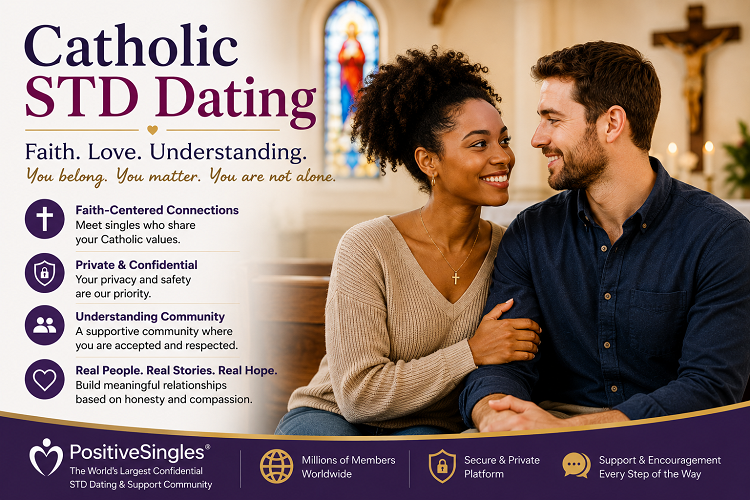
Dating while living with an STD can feel emotionally overwhelming, especially when faith shapes how you approach relationships, trust, and long-term commitment.
For many Catholic singles, dating is about much more than casual conversation. It often reflects deeply held values around honesty, compassion, emotional connection, and meaningful partnership.
After an STD diagnosis, difficult questions may arise:
- Will someone judge me?
- Does this change how faith-based partners see me?
- Can I still build a healthy relationship?
- How do I disclose my health status with dignity?
- Is love still realistic after diagnosis?
If these questions feel familiar, you are far from alone.
Sexually transmitted infections affect millions of people globally, and public health organizations consistently emphasize that a diagnosis is a health condition, not a measure of character or worth.
Faith, love, and connection remain possible.
You Are Not Alone in This Journey
One of the hardest parts of navigating STD Dating For Catholics is the feeling of isolation. It can seem like everyone else is living a “normal” life while you’re stuck dealing with something deeply personal.
But the reality is different.
Millions of people worldwide live with conditions like herpes or HIV. Among them are thousands of people of faith—people who still pray, still believe, and still long for meaningful relationships rooted in love and respect.
Within Christian STD dating spaces, you’ll find individuals who understand both your spiritual values and your life situation. These are people who aren’t judging you—they’re walking a similar path.
Faith Doesn’t Disqualify You from Love
There’s a common fear among Catholic singles with STDs that their diagnosis somehow makes them less worthy of love or marriage. That fear often comes from shame, stigma, or misunderstanding—not from faith itself.
Catholic teaching emphasizes compassion, forgiveness, and human dignity. Your value is not defined by a medical condition. You are still deserving of love, companionship, and a future.
Many who explore Christian Dating With STDs say their faith actually becomes stronger through this experience. It shifts their focus away from perfection and toward grace, honesty, and deeper connection.
Expert Perspectives on Dating, Vulnerability, and Stigma
Relationship psychology helps explain why STD dating can feel emotionally intense.
Dr. Justin Lehmiller, social psychologist and author of Tell Me What You Want, has written extensively about vulnerability, communication anxiety, and fear of rejection in romantic relationships.
His broader relationship research suggests that anticipated rejection often creates more emotional anxiety than actual partner responses.
That emotional pattern strongly mirrors STD disclosure experiences.
Public health psychology offers similar perspective.
Dr. Perry N. Halkitis, a public health psychologist and researcher known for his work on HIV stigma and psychosocial health, has examined how health-related stigma can affect confidence, emotional well-being, and social connection.
These perspectives reinforce an important truth:
Dating anxiety after diagnosis is understandable—but it does not define your future.
The Reality of Dating with an STD in a Faith-Based Context
Dating while living with an STD requires honesty, patience, and courage. For Catholics, it also involves aligning relationships with values like commitment, respect, and emotional integrity.
In Catholic dating with herpes or HIV Positive Catholic Dating, conversations may feel heavier at first—but they also tend to be more meaningful. People are often more intentional. They’re not just dating casually; they’re looking for something real.
This creates a different kind of dating experience—one where trust is built through vulnerability rather than surface-level attraction.
The Power of Faith-Based STD Dating Communities
Online communities have changed everything.
Instead of feeling alone, people can now connect with others who share both their condition and their beliefs. These platforms for Faith-Based STD Dating and STD positive Christian singles offer a safe space to meet people without fear of immediate rejection.
Community members often share their experiences, struggles, and victories. This creates a sense of belonging that many never thought possible after their diagnosis.
What people often say in these communities:
“I finally felt understood for the first time.”
“I didn’t have to explain myself or hide anything.”
“It wasn’t just dating—it was healing.”
These shared experiences help normalize what once felt isolating.
Navigating Disclosure with Faith and Confidence
One of the biggest concerns in herpes dating for Catholics or Christian STD Dating is disclosure—when and how to tell someone about your condition.
There’s no perfect script, but there are principles that help:
Speak honestly, but don’t rush. Trust takes time, and disclosure should happen when a connection is developing, not forced too early or delayed too long.
Frame your story with confidence. Your diagnosis is just one part of your life, not your identity.
Approach the conversation with faith. Trust that the right person will respond with understanding, not judgment.
Many people report that when they disclose within a faith-based STD dating environment, the response is far more compassionate than expected.
Rebuilding Confidence After Diagnosis
A diagnosis can shake your confidence. That’s natural. But confidence isn’t lost forever—it can be rebuilt.
Start by focusing on your identity beyond your condition. You are more than a label. You are a person with values, goals, and a future.
Engage in communities that support you. Surrounding yourself with other STD Positive Christian Singles can remind you that you’re not alone.
Lean into your faith. Prayer, reflection, and spiritual guidance can help restore a sense of peace and purpose.
Over time, many people find that they become stronger, more self-aware, and more intentional in their relationships than before.
Love Rooted in Faith Is Different
One of the unexpected blessings people discover in Catholic STD Dating is the depth of connection.
When physical attraction isn’t the only focus, emotional and spiritual bonds grow stronger. Conversations become more meaningful. Intentions become clearer.
Relationships formed through Christian dating with STDs often emphasize:
- Honesty over perfection
- Commitment over convenience
- Faith over fear
This doesn’t mean every relationship will succeed—but it does mean they’re built on a stronger foundation.
FAQ: STD Dating for Catholic Singles
Is Catholic STD dating really possible?
Yes. Many Catholic singles are navigating similar situations and finding meaningful relationships through faith-based platforms and communities.
When should I disclose my STD status?
It’s best to share once trust begins to form, before the relationship becomes physically intimate. Timing depends on comfort and connection.
Will people reject me because of my condition?
Some might, and that’s part of dating in general. But many people—especially within Christian STD dating communities—are understanding and open.
Can I still have a faith-centered relationship?
Absolutely. Your faith journey doesn’t stop because of a diagnosis. In many cases, it becomes stronger.
Are there communities for STD positive Christian singles?
Yes, there are growing online communities and platforms specifically for STD positive Christian singles and Catholic singles with STDs.
Final Thoughts: Faith Leads the Way
Living with an STD doesn’t close the door to love, it changes how you walk toward it. For Catholic singles, faith becomes the guiding light through uncertainty, fear, and hope. It reminds you that your worth is not defined by your past or your diagnosis. Through catholic STD dating, Christian STD Dating, and supportive communities, people are finding something deeper than just relationships—they’re finding acceptance, healing, and purpose.
Love is still possible. Faith is still strong. And your story is still unfolding.
Medical Disclaimer: This content is for informational purposes only and does not replace professional medical advice, diagnosis, or treatment. Always consult a qualified healthcare provider for personal health guidance.


