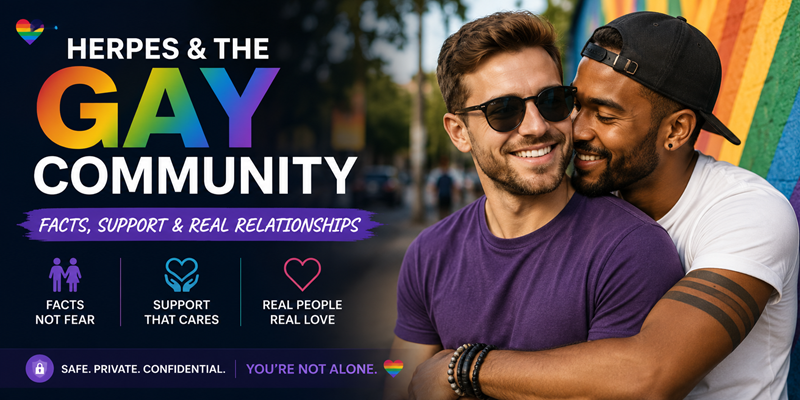
Receiving a herpes diagnosis can feel overwhelming, especially when you’re part of the LGBTQ+ community. Many gay men worry about rejection, judgment, or whether they’ll ever have a healthy relationship again. The truth is that herpes is extremely common, and it does not define your worth, your identity, or your future.
Conversations around Gay Herpes Dating have become more open in recent years, but stigma still prevents many people from looking for support, building relationships, or talking honestly about their health. Education, compassion, and accurate information can replace fear with confidence.
Understanding Herpes in the Gay Community
Herpes simplex virus (HSV) is one of the most common viral infections worldwide. It exists mainly as HSV-1 and HSV-2. Either type can affect the oral or genital area through skin-to-skin contact.
For gay and bisexual men, herpes can spread during oral, anal, or genital sexual contact. Many people who carry HSV experience mild symptoms or no symptoms at all, meaning they may not know they have the virus.
Having herpes is not connected to someone’s character, lifestyle, or number of partners. It is simply a common health condition that affects millions of people from every background.
Good Gay Sexual Health includes regular STI testing, open communication with partners, understanding personal risk, and consulting healthcare professionals when symptoms appear.
The Facts Behind the Stigma
One of the biggest challenges isn’t herpes itself—it’s the social stigma surrounding it.
Many people mistakenly believe herpes is rare or that only certain groups get infected. Medical research consistently shows that HSV is widespread across all genders and sexual orientations.
Understanding these Herpes Stigma Facts helps reduce fear:
Herpes is incredibly common worldwide.
Many people never develop noticeable symptoms.
People with HSV can have healthy romantic and sexual relationships.
Treatment options help reduce outbreaks and lower the risk of transmission.
Honest communication often strengthens trust between partners.
The emotional burden created by stigma is often greater than the physical symptoms of HSV.
Dating While Living with Herpes
Dating after an HSV diagnosis may seem intimidating at first, but many people successfully build lasting relationships.
Modern HSV Dating Guide strategies focus on honesty, education, and mutual respect rather than fear.
Many individuals find that dating becomes easier once they accept their diagnosis and connect with people who understand their experience.
Whether meeting someone through LGBTQ+ social groups, community events, or herpes-friendly dating platforms, confidence grows with knowledge and self-acceptance.
Successful Gay Herpes Dating isn’t about finding someone “willing to accept” you. It’s about finding someone who values honesty, communication, and emotional connection.
Building Healthy Relationships
A herpes diagnosis doesn’t prevent love.
Many couples report that discussing HSV improved communication by encouraging openness from the beginning.
Healthy Positive Gay Relationships are built on:
Trust.
Respect.
Emotional intimacy.
Mutual understanding.
Shared responsibility for sexual health.
Partners who learn together often feel more connected than those who avoid difficult conversations.
When both individuals understand herpes transmission, preventive measures, and treatment options, unnecessary anxiety usually decreases.
Herpes Disclosure Doesn’t Have to Be Scary
Disclosure is one of the biggest fears people experience after diagnosis.
The good news is that many partners appreciate honesty more than perfection.
Helpful Herpes Disclosure Tips include discussing HSV before sexual activity, choosing a private and relaxed setting, speaking confidently without apologizing for having a medical condition, sharing factual information instead of myths, and allowing your partner time to ask questions.
Remember that disclosure is about respect—not asking permission to exist.
Many people respond far more positively than expected when conversations are calm, informed, and honest.
Mental Health Matters Too
Living with herpes may affect confidence, especially shortly after diagnosis.
Some people experience anxiety, embarrassment, or fear of rejection.
These emotions are understandable, but they usually improve with education and support.
Connecting with others through Gay HSV Support groups helps normalize the experience.
Talking with mental health professionals who understand LGBTQ+ issues can also reduce feelings of isolation.
Your diagnosis should never define your identity, relationships, or future.
Finding Strength Through Community
No one should face HSV alone.
The growing LGBTQ Herpes Community provides safe spaces where people can ask questions, share experiences, and receive encouragement without judgment.
Online forums, local LGBTQ+ organizations, peer support groups, and educational communities remind people that they are far from alone.
Many individuals say joining these communities was the turning point in rebuilding confidence after diagnosis.
Support from others who truly understand the experience often makes the healing journey much easier.
Community Sources and Trusted Information
Reliable health information is essential when making decisions about herpes.
Trusted organizations include:
- Centers for Disease Control and Prevention (CDC)
- World Health Organization (WHO)
- American Sexual Health Association (ASHA)
- HIV.gov
- Local LGBTQ+ community centers
- LGBTQ+ health clinics
- Sexual health professionals and infectious disease specialists
These organizations provide medically reviewed information, educational resources, and support for people living with HSV.
Frequently Asked Questions
Can people with herpes have healthy relationships?
Absolutely. Millions of people with HSV enjoy loving, committed relationships. Honest communication and informed decision-making help couples build trust.
Is herpes common among gay men?
Herpes affects people of every sexual orientation. Anyone sexually active can contract HSV through skin-to-skin contact.
Does herpes always cause symptoms?
No. Many individuals have mild symptoms or none at all, which is why routine sexual health discussions and testing are important.
Should I tell a partner I have herpes?
Yes. Open communication before sexual activity allows both people to make informed decisions and builds trust within the relationship.
Can treatment reduce transmission?
Yes. Healthcare providers may recommend antiviral medication that helps reduce outbreaks and lowers the risk of passing HSV to partners. Discuss the best treatment plan with your clinician.
Where can I find Gay Herpes Resources?
Trusted healthcare organizations, LGBTQ+ health centers, sexual health clinics, support groups, and medically reviewed educational websites provide valuable Gay Herpes Resources for learning, emotional support, and relationship guidance.
Final Thoughts
A herpes diagnosis does not define your future, your relationships, or your value. With accurate information, compassionate support, and honest communication, it is entirely possible to build fulfilling relationships and maintain excellent Gay Sexual Health.
The conversation around Gay Herpes Dating continues to evolve as more people challenge stigma with education and empathy. By learning the facts, practicing respectful disclosure, connecting with the LGBTQ Herpes Community, and using trusted Gay Herpes Resources, you can move beyond fear and focus on what truly matters—healthy, meaningful, and authentic connections.


