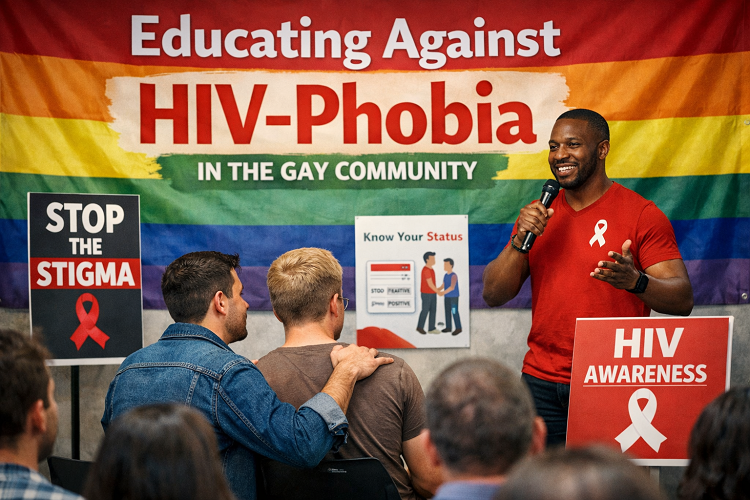
HIV‑Phobia — the fear, prejudice, or ostracism based on HIV status still affects many lives in the gay community. Even in 2026, despite massive progress in treatment, prevention, and understanding, outdated beliefs persist. These fears can hurt relationships, discourage testing, and deepen shame.
This article is a respectful, honest, and hopeful conversation designed to educate, empower, and shift perspectives.
What is HIV‑Phobia?
HIV‑phobia isn’t just “fear of HIV.” It’s a set of attitudes and behaviors rooted in misunderstanding, stigma, and social bias that lead to:
- Avoiding friendships or relationships with people living with HIV
- Making assumptions about someone’s behavior based only on their status
- Shunning health education that could prevent harm
- Treating HIV status as a moral judgment rather than a health fact
This fear affects everyone, those living with HIV, partners, friends, and allies. And it harms community health.
Why HIV‑Phobia Still Exists
Even though science has moved forward, stigma lingers because:
- Misinformation: Not everyone knows how HIV is transmitted or prevented
- History of fear: Past decades associated HIV with death and guilt
- Cultural influences: Family, religion, and media shaped early narratives
- Lack of open dialogue: People avoid talking about HIV and safer sex
Understanding the why helps us change the how we think and act.
What Science Actually Says: Breaking Down the Facts
Transmission — The Real Risks
HIV is transmitted only through specific exposures:
- Unprotected sex with body fluids
- Sharing needles
- Mother‑to‑child during pregnancy or breastfeeding (unless prevention is used)
HIV is NOT spread by:
- Hugging, kissing, or casual touch
- Sharing dishes, toilets, or towels
- Sweat or saliva alone
Good sources like UNAIDS and WHO emphasize that everyday interaction poses no risk. Community educational programs agree: knowledge reduces fear.
Source: UNAIDS + community health workshops
Undetectable = Untransmittable (U=U)
One of the most important breakthroughs:
People with HIV who are on treatment and have an undetectable viral load cannot transmit HIV sexually.
This isn’t theory — it’s backed by multiple studies and endorsed by major health organizations.
Why it matters:
- It reduces fear around intimacy
- Encourages testing and treatment
- Reframes HIV as a manageable condition
Prevention Options
No single prevention strategy fits all. Options include:
- PrEP (Pre‑Exposure Prophylaxis): Daily or event‑based pills to prevent infection
- Condoms: Still a powerful tool
- Regular testing: Knowing your status helps you care for yourself and others
- Treatment as prevention: Viral suppression protects partners
Education empowers choice, not shame.
Experience: Voices from the Community
Real stories illustrate how HIV‑phobia feels — and how it can change.
“I used to lie about my status at parties because I felt people treated me differently.”
— Masked Testimonial #1
When this individual learned about U=U, it changed everything:
“Once I understood that being undetectable means I’m not a threat, I could finally be honest. And the connection I built afterward? Real and authentic.”
Another reflection:
“Friends would avoid me after I told them I was HIV‑positive.”
— Masked Testimonial #2
The pain is real. But healing happened through community support groups:
“Sharing meals, talking openly, laughing — that’s how stigma broke down for us. Education was the door; community was the cure.”
These experiences show that fear often stems from uncertainty — and community support bridges that gap.
Expertise: What Health Professionals Want You to Know
Public health specialists agree:
✔ HIV is a chronic health condition, not a moral failing.
✔ Treatment works — modern medicine has transformed lives.
✔ Fear doesn’t prevent infection; knowledge does.
✔ Stigma drives people away from testing and care.
Doctors and counselors stress the same thing: Non‑judgmental support increases health outcomes.
Authority: Credible Guidelines on HIV
Here are trusted sources you can explore:
- UNAIDS: Global HIV/AIDS data and advocacy
- World Health Organization (WHO): Clinical guidelines and prevention strategies
- National health ministries: Local testing and support programs
- Community health centers: Tailored support in your area
These organizations work with communities worldwide to reduce stigma and improve health outcomes.
Trustworthiness: Separating Myths from Reality
The best defense against HIV‑phobia is clarity.
Myth vs. Reality
Myth: “HIV is a death sentence.”
Reality: With treatment, life expectancy is near normal.
Myth: “Only certain people get HIV.”
Reality: Anyone can, but preventive tools make infection avoidable.
Myth: “If someone is HIV‑positive, they shouldn’t date.”
Reality: With open communication and care, relationships thrive.
How to Talk About HIV Without Stigma
Communication matters. Here’s how to make conversations safer and more respectful:
Use People‑First Language
Say “person living with HIV” instead of labels.
Ask — Don’t Assume
If it’s relevant, ask about health policies respectfully, not invasively.
Normalize Testing
Routine testing is part of self‑care, not suspicion.
Share Facts, Not Fear
When you hear misinformation, correct it gently.
How to Support Someone Living with HIV
Support looks like:
- Listening without judgment
- Offering companionship to appointments
- Encouraging treatment and well‑being
- Being educated about prevention
Your empathy matters.
Community Source Highlights
These groups are doing great work around education and support:
- Gay health alliances and clinics offering free testing and counseling
- Support networks that host workshops and community gatherings
- Online peer groups focused on safe, anonymous education
- Youth outreach programs addressing stigma early
These are models of how community action reduces phobia and builds resilience.
FAQs — Honest Answers to Common Questions
Q1: Can I get HIV from kissing?
A: No, HIV is not spread through saliva alone.
Q2: Does PrEP really work?
A: Yes — when taken as prescribed, it’s highly effective.
Q3: Am I safe if my partner is undetectable?
A: Yes. U=U means no sexual transmission when viral load is undetectable.
Q4: Should I be afraid of someone with HIV?
A: Fear isn’t necessary. Understanding risk and support options is key.
Q5: How often should I test for HIV?
A: Many health programs recommend regular screening based on risk — often every 3–6 months for sexually active individuals with multiple partners.
Testimonials — Community Voices (Masked)
Testimonial #3
“When I first heard about HIV, all I felt was fear. But talking to someone living with HIV in my group changed my life. I wish everyone had that moment.”
Testimonial #4
“Learning about U=U made me rethink my dating life. Today I’m happier, more open, and I recommend testing events to my friends.”
Testimonial #5
“People used to avoid me when I said I was HIV‑positive. Now they ask questions, not judgments. That’s growth.”
These voices reflect transformation — not just facts.
What You Can Do Today
You don’t have to be an expert to help reduce stigma:
- Share accurate info on social media
- Attend community education events
- Encourage testing and treatment access
- Use supportive language
- Check myths before spreading them
Small actions add up.
Final Thoughts
HIV‑Phobia Is Real — but it is not inevitable. Knowledge, empathy, and community make a powerful antidote. When we educate ourselves, support each other, and challenge outdated myths, we:
❤️ Build healthier relationships
❤️ Improve mental and physical well‑being
❤️ Strengthen the community fabric